
atient contact is introduced by the second year of education. Starting from this level, clinical experience and learning are provided by a combination of lectures, seminars, student-conferences, tutor sessions, hands-on teaching, and patient activities. The formal clinical training of the fourth and fifth-year students offers comprehensive courses providing the necessary preparation for post-graduate training in the full range of disciplines that comprise modern medicine. In the sixth year of medical school - the “internship” period - the emphasis is on diagnostic reasoning and medical decision making.
Patient contact is introduced by the second year of education. Starting from this level, clinical experience and learning are provided by a combination of lectures, seminars, student-conferences, tutor sessions, hands-on teaching, and patient activities. The formal clinical training of the fourth and fifth-year students offers comprehensive courses providing the necessary preparation for post-graduate training in the full range of disciplines that comprise modern medicine. In the sixth year of medical school - the “internship” period - the emphasis is on diagnostic reasoning and medical decision making.

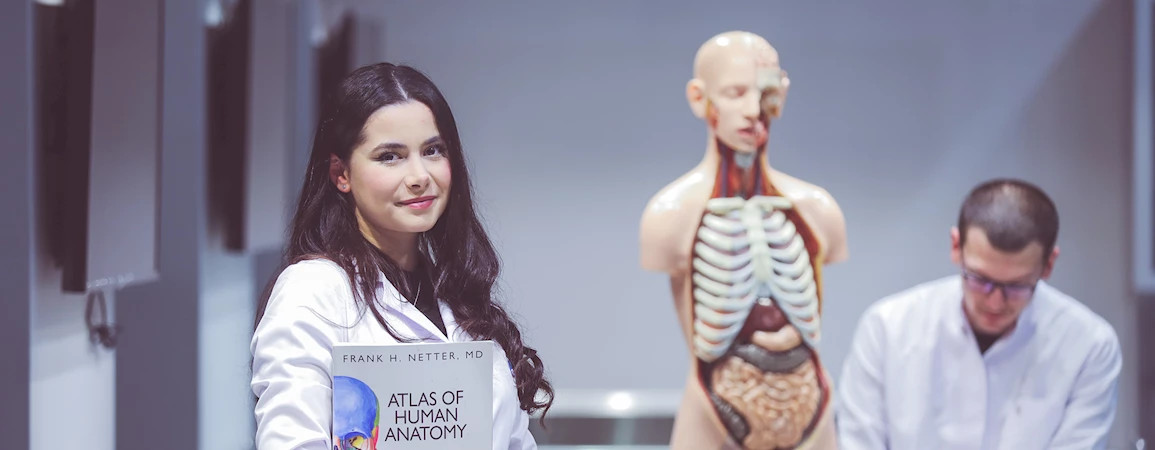
One of the prior needs of the global community is doctors who know how to use the latest techniques and the most advanced technologies in health-care by planning and implementing scientific and academic research. Given these facts, the main goal of IMU School of Medicine is to play an important role in the provision and the exploration of knowledge in this field.
Aiming to be the leader in medical education and research, IMU School of Medicine is centrally located in a modern urban academic health center that provides an exceptional environment for students interested in basic science, clinical investigation, public health and health services oriented research. IMU School of Medicine requires passionate students who would bring enthusiasm and creativity to their work. The duration of education in the School of Medicine is six years preceded by one year of English language teaching for those who fail in a proficiency exam. During succeeding medical education, minimally 30% of the courses are instructed in English.

Goal 1: To provide internationally competent medical education by continuously improving the education program Objective 1.1: To carry out an education program that provides the fundamental roles and competencies defined in the graduation objectives of the School of Medicine Objective 1.2: To consider the common health problems of the society in the design of the education program and to ensure its compliance with the national core education program Objective 1.3: To continuously renew and update the education program in accordance with current national and international medical education paradigms, scientific and technological developments, and changing public health needs Objective 1.4: To have a Pre-Graduate Medical Education Program that is accredited and continuously monitored by national and international organizations Objective 1.5: To improve and develop the infrastructure in line with the requirements of the updated medical education program Objective 1.6: To ensure that faculty members with recognized international competence in their fields are included in the teaching staff of the institution Goal 2: To support faculty members to continuously improve their educational qualifications Objective 2.1: To organize continuous and need-based educational development programs for faculty members to use current education-teaching methods and technologies effectively Objective 2.2: To establish a system to evaluate the teaching qualifications of faculty members Goal 3: To provide students with competencies that include critical thinking, problem solving, and lifelong learning Objective 3.1: To prioritize learner-centered multidisciplinary and interdisciplinary program design in medical education Objective 3.2: To provide students with the qualifications to solve the current health problems of the society and contribute to the health education of the society by producing knowledge and services Objective 3.3: To create and support social responsibility projects in which students take an active role in cooperation with non-governmental organizations and various government institutions Objective 3.4: To carry out activities that contribute to the individual and social development of students Objective 3.5: To diversify and improve the educational materials offered to students and to expand the use of technology in medical education Objective 3.6: To encourage students to pursue double major and doctoral programs Objective 3.7: To update and improve the academic and career counseling system on a national and international scale Objective 3.8: To establish relations with national and international educational institutions and to encourage student mobility


_1758635457.png)